
Omega-3 (EPA/DHA)
Also known as: Fish Oil, EPA, DHA, Eicosapentaenoic Acid, Docosahexaenoic Acid, n-3 PUFA
Essential long-chain polyunsaturated fatty acids that serve as structural components of cell membranes and precursors to specialized pro-resolving mediators (SPMs) that actively resolve inflammation.
Last reviewed: 2024-07-01 · 2 indexed studies
Set your location for accurate regulatory status
Saved on this device — no sign-in needed.
Overview
Omega-3 fatty acids EPA and DHA are essential polyunsaturated fats critical for cardiovascular health, brain structure, inflammation resolution, and cellular membrane fluidity. They are the most researched supplement category globally.
Mechanism & Function
EPA · C₂₀H₃₀O₂ — source: PubChem CID 446284
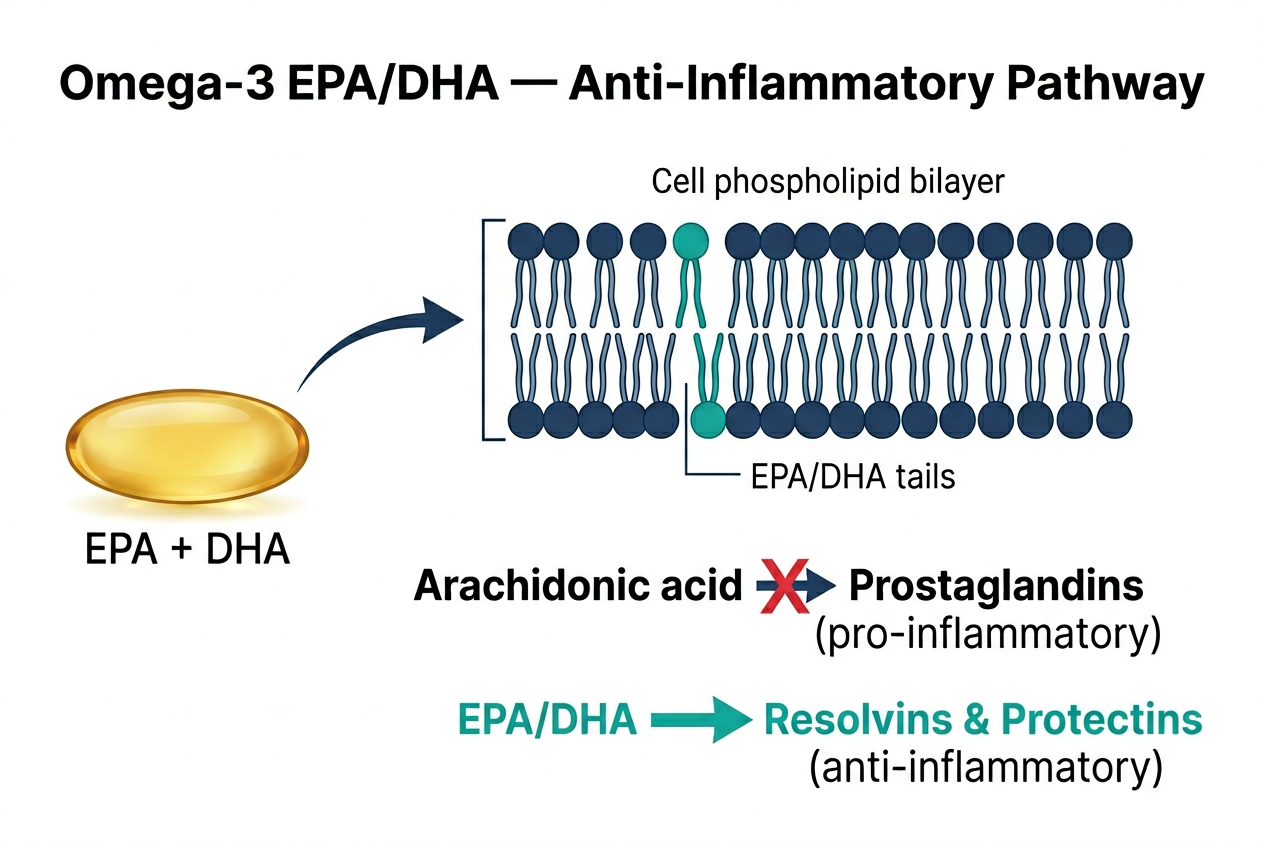
EPA and DHA incorporate into cell membranes and outcompete arachidonic acid, producing resolvins and protectins instead of pro-inflammatory eicosanoids.
Pale gold marine oil — light- and oxygen-sensitive; best stored cold.
- Softgel
- Liquid
- Liquid Cap
Softgel is generally preferred for bioavailability or efficacy.
Mechanism of Action
EPA competes with arachidonic acid for COX/LOX enzymes, shifting eicosanoid production toward anti-inflammatory prostaglandins and resolvins. DHA is a primary structural lipid in neuronal membranes and retinal photoreceptors, maintaining membrane fluidity and signal transduction. Both are precursors to specialized pro-resolving mediators (resolvins, protectins, maresins).
Physiological Role
Critical structural component of brain gray matter (DHA) and cardiovascular tissue. EPA and DHA regulate inflammatory cascades, platelet aggregation, triglyceride metabolism, and neuronal function throughout the lifespan.
Primary Pathways
Performance / Health Relevance
Reduces exercise-induced inflammation and DOMS. Supports cardiovascular efficiency. DHA maintains cognitive function under training fatigue. May improve body composition via PPARγ activation and lipid metabolism.
Evidence Review
Practical Use & Dosage
- Minimum Effective Dose
- 500mg combined EPA+DHA/day
- Optimal Range
- 2000–3000mg combined EPA+DHA/day
- Upper / Caution Level
- 5000mg/day (EFSA upper limit)
- Timing
- With meals containing fat for absorption
- Best Format
- Triglyceride-form fish oil or algal oil (vegan)
- Bioavailability
- Triglyceride form ~70% more bioavailable than ethyl ester form. Krill oil has unique phospholipid delivery.
- Absorption Considerations
- Always take with a fat-containing meal. Enteric-coated capsules reduce fishy burps. Emulsified forms show enhanced absorption.
Safety & Interactions
Side Effects
- •Fishy aftertaste/burps
- •Mild GI upset
- •Loose stools at high doses
Contraindications
- Fish/shellfish allergy (use algal alternative)
- Upcoming surgery (discontinue 1–2 weeks prior)
Drug Interactions
- •Anticoagulants/antiplatelets (additive bleeding risk)
- •High-dose aspirin
- •Blood pressure medications (additive hypotension)
Who Should Avoid
- •Those with fish allergies (use algal DHA/EPA)
- •Pre-surgical patients without physician guidance
Monitoring
Monitor bleeding time if on anticoagulants. Omega-3 Index blood test available to assess tissue levels (target: 8–12%).
Frequently Asked Questions
Auto-generated from indexed evidence — dosage, safety, interactions, and more.
When is Omega-3 (EPA/DHA) typically used or indicated?
Omega-3 (EPA/DHA) is most commonly used for: Heart health, Anti-inflammation, Brain health, Joint support, Recovery. Critical structural component of brain gray matter (DHA) and cardiovascular tissue. EPA and DHA regulate inflammatory cascades, platelet aggregation, triglyceride metabolism, and neuronal function throughout the lifespan.
How does Omega-3 (EPA/DHA) work?
EPA competes with arachidonic acid for COX/LOX enzymes, shifting eicosanoid production toward anti-inflammatory prostaglandins and resolvins. DHA is a primary structural lipid in neuronal membranes and retinal photoreceptors, maintaining membrane fluidity and signal transduction. Both are precursors to specialized pro-resolving mediators (resolvins, protectins, maresins).
What is the recommended dose of Omega-3 (EPA/DHA)?
The optimal range is 2000–3000mg combined EPA+DHA/day. with a minimum effective dose of 500mg combined EPA+DHA/day. Best taken: With meals containing fat for absorption. Upper / caution level: 5000mg/day (EFSA upper limit).
What are the side effects of Omega-3 (EPA/DHA)?
Reported side effects include: Fishy aftertaste/burps; Mild GI upset; and Loose stools at high doses. Monitoring: Monitor bleeding time if on anticoagulants. Omega-3 Index blood test available to assess tissue levels (target: 8–12%).
Does Omega-3 (EPA/DHA) interact with medications?
Known or theoretical interactions: Anticoagulants/antiplatelets (additive bleeding risk); High-dose aspirin; and Blood pressure medications (additive hypotension). Always check with a clinician before combining with prescription medication.
Who should avoid Omega-3 (EPA/DHA)?
Omega-3 (EPA/DHA) is generally not recommended for: Those with fish allergies (use algal DHA/EPA); Pre-surgical patients without physician guidance; Fish/shellfish allergy (use algal alternative); and Upcoming surgery (discontinue 1–2 weeks prior).
How strong is the evidence for Omega-3 (EPA/DHA)?
Evidence level: Strong (overall score 92/100), based on 2 indexed studies on SuppIndex.
Research & References (2)
Omega-3 fatty acids and cardiovascular disease: effects, mechanisms, and dietary relevance
Large meta-analysis of 40+ RCTs confirming EPA/DHA supplementation significantly reduces triglycerides (25–30%), cardiovascular events, and inflammatory markers.
DHA supplementation and cognitive function: a systematic review
Systematic review showing DHA supports cognitive maintenance in aging populations and may improve episodic memory, particularly when baseline omega-3 status is low.
Trademark Ingredients

Related Ingredients
Other top-rated ingredients in Fatty Acids.
Research Overview
Strong EvidenceCite this ingredient
One-click citation export in APA, MLA, Chicago, BibTeX, or HTML. The URL below is stable and safe to link.
Stable URL
https://thesuppindex.com/ingredients/omega-3-epa-dha
SuppIndex. (2026). Omega-3 (EPA/DHA): Evidence summary, dosage and clinical studies. Retrieved October 23, 2026, from https://thesuppindex.com/ingredients/omega-3-epa-dha
Based on 2 indexed studies · Evidence level: Strong.
Goal Ratings
Stack Compatibility
Universal stacker. Synergy with Vitamin D, curcumin (shared anti-inflammatory pathways), and piperine (enhanced absorption).
Products (2)
Nordic Naturals
Ultimate Omega
Carlson
Elite Omega-3 Gems