
Magnesium Glycinate
Also known as: Magnesium Bisglycinate, Chelated Magnesium, Magnesium Diglycinate
An amino acid chelate of magnesium providing elemental Mg²⁺ bound to two glycine molecules, offering superior bioavailability and minimal gastrointestinal side effects.
Last reviewed: 2024-01-25 · 3 indexed studies
Set your location for accurate regulatory status
Saved on this device — no sign-in needed.
Overview
Magnesium glycinate is a highly bioavailable form of magnesium chelated with glycine. It is favored for sleep support and muscle recovery due to excellent absorption and tolerability.
Mechanism & Function
Magnesium bisglycinate — chelate of Mg²⁺ + 2 glycine (PubChem CID 84645)
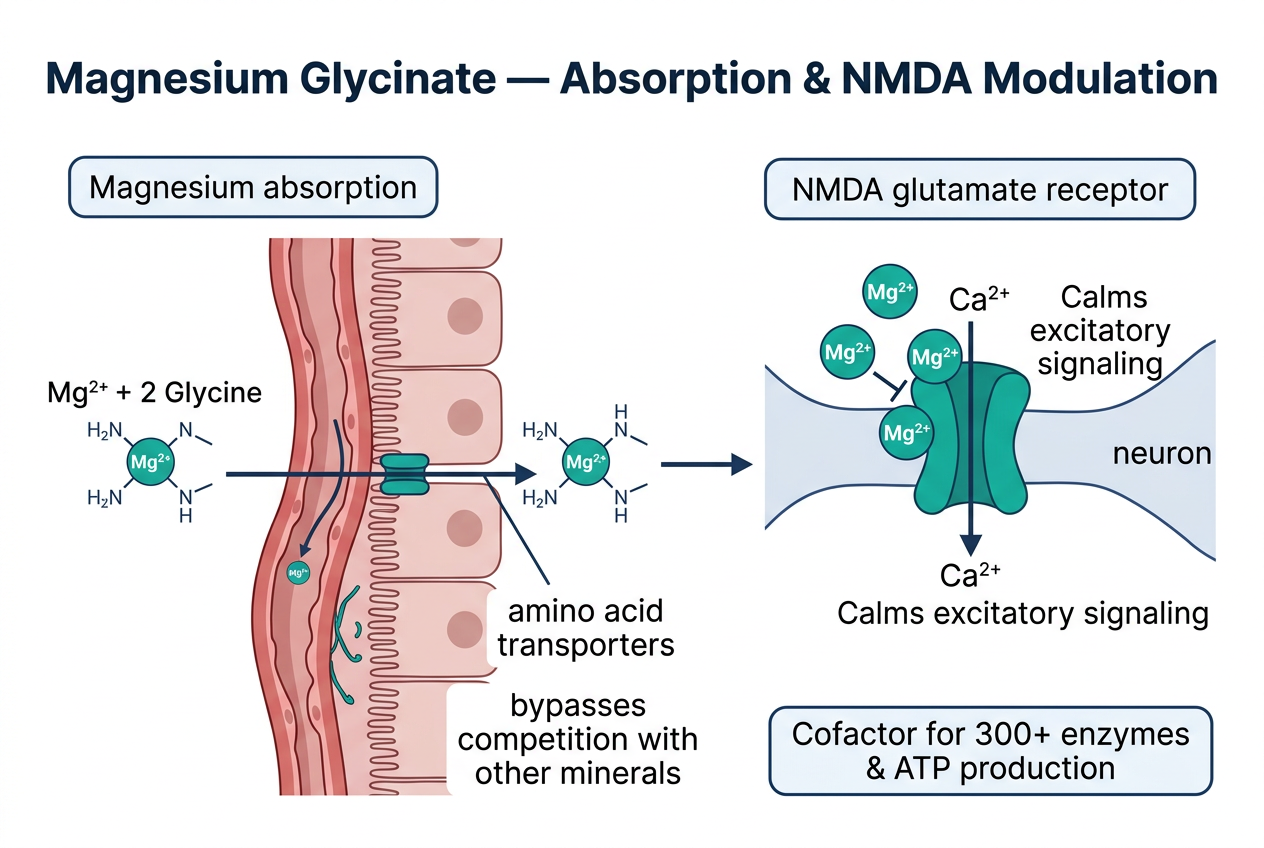
Glycine chelation enables absorption via amino acid transporters. Mg²⁺ blocks NMDA receptors and serves as a cofactor for 300+ enzymes including ATP production.
Off-white/cream chelated mineral powder. Less laxative than magnesium oxide/citrate.
- Capsule
- Powder
- Tablet
- Gummy
Capsule is generally preferred for bioavailability or efficacy.
Mechanism of Action
Magnesium is a cofactor for 300+ enzymatic reactions including ATP synthesis, protein synthesis, and neuromuscular function. Glycinate chelation improves bioavailability.
Physiological Role
Essential mineral cofactor for ATP synthesis, DNA replication, protein synthesis, neuromuscular function, and bone mineralization.
Primary Pathways
Performance / Health Relevance
Adequate magnesium status is critical for optimal muscle contraction, energy production, and recovery. Glycine component may independently support sleep quality.
Evidence Review
Compare Magnesium Forms
Full comparison5 magnesium forms are indexed. Bioavailability, clinical evidence, and best-use cases differ meaningfully between them.
| Form | Evidence |
|---|---|
Magnesium GlycinateThis page Glycinate chelation provides ~80% relative bioavailability vs ~4% for magnesium oxide. | 84/100 |
| Magnesium Citrate ~25–30% absorption — superior to oxide; below glycinate for neurological endpoints. | 70/100 |
| Aquamin Mg Comparable to other Mg hydroxide forms. | 58/100 |
| Magnesium L-Threonate Described by the developers and trial abstracts as having superior ability to raise brain magnesium concentrations compared with other magnesium salts. | 54/100 |
| Magnesium Oxide In patients with marked intestinal malabsorption (ileal resection), magnesium oxide showed lower absorption compared with a magnesium diglycinate chelate in a crossover study (7815675). | 52/100 |
Practical Use & Dosage
- Minimum Effective Dose
- 100mg elemental Mg
- Optimal Range
- 200–400mg elemental magnesium daily
- Upper / Caution Level
- 800mg elemental Mg (from supplements)
- Timing
- Evening (1–2 hours before bed) for sleep. Split doses for general use.
- Best Format
- Chelated bisglycinate capsule or powder
- Bioavailability
- Glycinate chelation provides ~80% relative bioavailability vs ~4% for magnesium oxide.
- Absorption Considerations
- Avoid taking with high-dose calcium, zinc, or iron supplements simultaneously (competitive absorption).
Safety & Interactions
Side Effects
- •Mild drowsiness (desired for sleep use)
- •Loose stools at very high doses
Contraindications
- Severe renal impairment
Drug Interactions
- •Antibiotics (tetracyclines, quinolones — separate by 2 hours)
- •Bisphosphonates
Who Should Avoid
- •Those with severe kidney disease without medical supervision
Monitoring
RBC magnesium is more accurate than serum magnesium. Optimal RBC Mg: 5.0–6.5 mg/dL.
Frequently Asked Questions
Auto-generated from indexed evidence — dosage, safety, interactions, and more.
When is Magnesium Glycinate typically used or indicated?
Magnesium Glycinate is most commonly used for: Sleep support, Muscle recovery, Stress management, Bone health. Essential mineral cofactor for ATP synthesis, DNA replication, protein synthesis, neuromuscular function, and bone mineralization.
How does Magnesium Glycinate work?
Magnesium is a cofactor for 300+ enzymatic reactions including ATP synthesis, protein synthesis, and neuromuscular function. Glycinate chelation improves bioavailability.
What is the recommended dose of Magnesium Glycinate?
The optimal range is 200–400mg elemental magnesium daily. with a minimum effective dose of 100mg elemental Mg. Best taken: Evening (1–2 hours before bed) for sleep. Split doses for general use.. Upper / caution level: 800mg elemental Mg (from supplements).
What are the side effects of Magnesium Glycinate?
Reported side effects include: Mild drowsiness (desired for sleep use); and Loose stools at very high doses. Monitoring: RBC magnesium is more accurate than serum magnesium. Optimal RBC Mg: 5.0–6.5 mg/dL.
Does Magnesium Glycinate interact with medications?
Known or theoretical interactions: Antibiotics (tetracyclines, quinolones — separate by 2 hours); and Bisphosphonates. Always check with a clinician before combining with prescription medication.
Who should avoid Magnesium Glycinate?
Magnesium Glycinate is generally not recommended for: Those with severe kidney disease without medical supervision; and Severe renal impairment.
How strong is the evidence for Magnesium Glycinate?
Evidence level: Strong (overall score 84/100), based on 3 indexed studies on SuppIndex.
Research & References (3)
The effect of magnesium supplementation on sleep quality: a systematic review
Review of 9 studies showing magnesium improved subjective sleep quality.
Bioavailability of magnesium amino acid chelates compared to inorganic salts
Randomised crossover comparing absorption of magnesium glycinate, citrate, and oxide.
Effects of magnesium supplementation on blood pressure: meta-analysis of randomized trials
Meta-analysis of 34 RCTs of magnesium supplementation on blood pressure.
Trademark Ingredients

Related Ingredients
Other top-rated ingredients in Minerals.
Calcium Citrate
75/100Calcium bound to citric acid; ~24% elemental Ca by mass; absorbed across the small intestine via active transport and paracellular diffusion regardless of gastric pH.
Zinc
74/100Systematic reviews and meta-analyses of human trials show that oral zinc supplementation reduces duration and increases recovery rates in acute and persistent watery diarrhoea in children; lowers inflammatory lesion counts in acne; reduces pain severity in primary dysmenorrhea; and in small trials (20–30 mg/day) improved fasting glucose and 2‑hr OGTT in people with prediabetes. Adverse effects reported include increased vomiting in children receiving zinc for diarrhoea.
Magnesium Citrate
70/100Magnesium ion bound to citric acid; citrate enhances solubility and intestinal absorption while providing mild osmotic laxative effect at higher doses.
Research Overview
Strong EvidenceCite this ingredient
One-click citation export in APA, MLA, Chicago, BibTeX, or HTML. The URL below is stable and safe to link.
Stable URL
https://thesuppindex.com/ingredients/magnesium-glycinate
SuppIndex. (2026). Magnesium Glycinate: Evidence summary, dosage and clinical studies. Retrieved October 23, 2026, from https://thesuppindex.com/ingredients/magnesium-glycinate
Based on 3 indexed studies · Evidence level: Strong.
Goal Ratings
Stack Compatibility
Essential cofactor for vitamin D3 activation. Pairs well with zinc and B6 (ZMA stack). Synergistic with L-theanine for sleep.
Related evidence
Compare Magnesium Glycinate with other researched ingredients.
- Magnesium Citrate— Magnesium ion bound to citric acid; citrate enhances solubil…
- Glycine— Simplest amino acid acting as an inhibitory neurotransmitter…
- Taurine— A β-amino sulfonic acid (not incorporated into protein) that…
Last reviewed Jan 2024
Products (1)
Thorne
Magnesium Bisglycinate