
Ashwagandha
Also known as: Withania somnifera, Indian Ginseng, Winter Cherry
An adaptogenic solanaceous plant whose bioactive withanolides modulate the hypothalamic-pituitary-adrenal axis and GABAergic neurotransmission.
Last reviewed: 2024-01-15 · 3 indexed studies
Set your location for accurate regulatory status
Saved on this device — no sign-in needed.
Overview
Ashwagandha (Withania somnifera) is a premier adaptogenic herb used for centuries in Ayurvedic medicine. Modern clinical research supports its role in reducing cortisol, improving stress resilience, and supporting hormonal balance.
Mechanism & Function
Withanolide A · C₂₈H₃₈O₆ — primary bioactive (PubChem CID 265237)
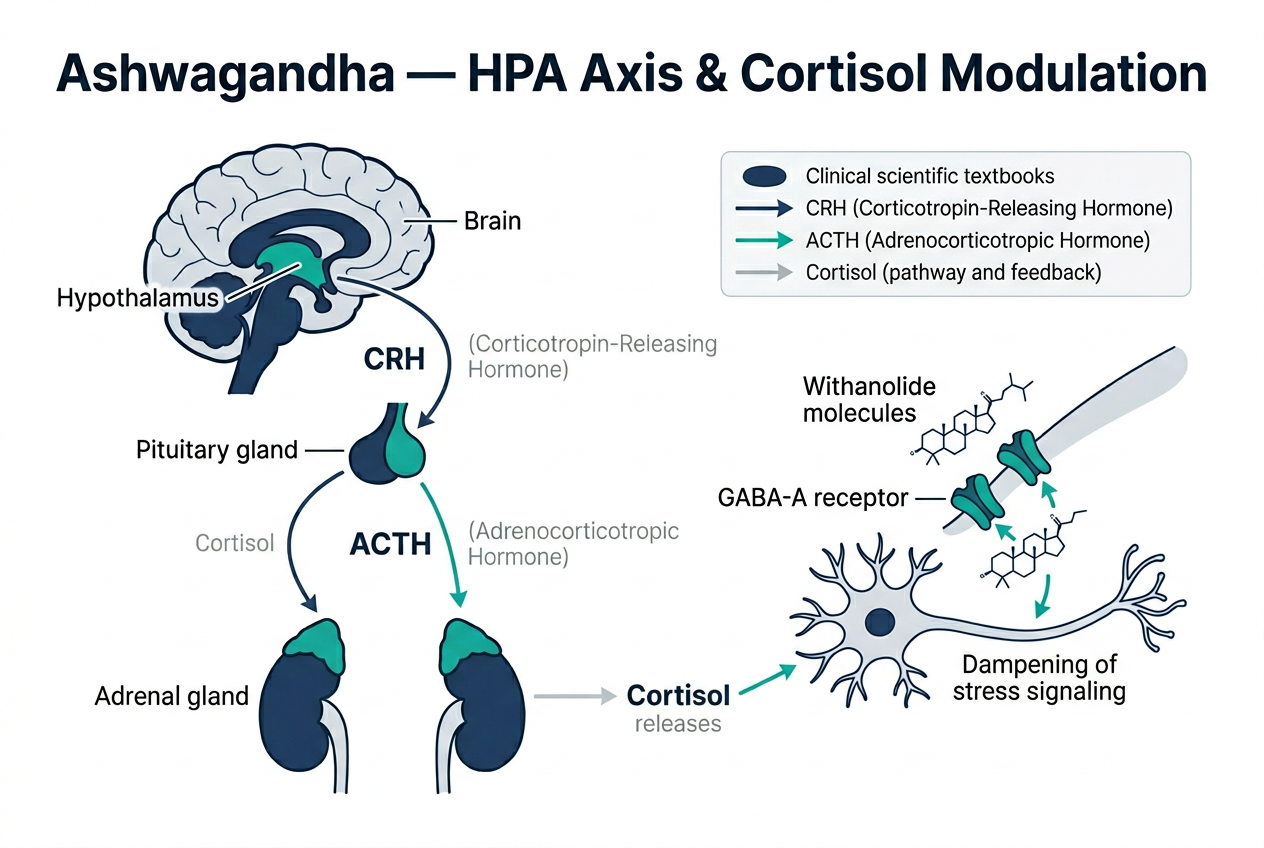
Withanolides modulate the HPA axis and bind GABA-A receptors, dampening cortisol output and the stress response.
Tan/light-brown root extract powder, typically standardized to 5%+ withanolides.
- Capsule
- Powder
- Tablet
- Gummy
Capsule is generally preferred for bioavailability or efficacy.
Mechanism of Action
Modulates the HPA axis, reducing cortisol levels. Withanolides exhibit adaptogenic, anti-inflammatory and anxiolytic properties through GABAergic modulation.
Physiological Role
Acts as a bidirectional adaptogen normalizing stress hormone cascades. Enhances GABA receptor sensitivity and modulates serotonergic pathways.
Primary Pathways
Performance / Health Relevance
Reduces exercise-induced cortisol, improves VO2 max, enhances recovery quality, and may support testosterone levels in males under chronic stress.
Evidence Review
Practical Use & Dosage
- Minimum Effective Dose
- 300mg/day (standardized extract)
- Optimal Range
- 300–600mg/day of root extract standardized to ≥5% withanolides
- Upper / Caution Level
- 1200mg/day
- Timing
- Evening for sleep/stress; morning for energy/performance
- Best Format
- Root extract capsule standardized to withanolides
- Bioavailability
- Full-spectrum root extracts show better clinical outcomes than isolated withanolides.
- Absorption Considerations
- Fat-soluble withanolides benefit from co-ingestion with a meal containing dietary fat.
Safety & Interactions
Side Effects
- •Mild GI discomfort (rare)
- •Drowsiness at higher doses
- •Thyroid hormone elevation
Contraindications
- Pregnancy and lactation
- Autoimmune thyroid conditions
- Surgery (2 weeks prior)
Drug Interactions
- •Thyroid medications
- •Immunosuppressants
- •Sedatives/benzodiazepines
Who Should Avoid
- •Pregnant/nursing women
- •Individuals with hyperthyroidism
- •Those on immunosuppressive therapy
Monitoring
Monitor thyroid function if using chronically. Consider cycling 8 weeks on / 2 weeks off.
Frequently Asked Questions
Auto-generated from indexed evidence — dosage, safety, interactions, and more.
When is Ashwagandha typically used or indicated?
Ashwagandha is most commonly used for: Stress management, Sleep quality, Hormonal balance, Athletic recovery. Acts as a bidirectional adaptogen normalizing stress hormone cascades. Enhances GABA receptor sensitivity and modulates serotonergic pathways.
How does Ashwagandha work?
Modulates the HPA axis, reducing cortisol levels. Withanolides exhibit adaptogenic, anti-inflammatory and anxiolytic properties through GABAergic modulation.
What is the recommended dose of Ashwagandha?
The optimal range is 300–600mg/day of root extract standardized to ≥5% withanolides. with a minimum effective dose of 300mg/day (standardized extract). Best taken: Evening for sleep/stress; morning for energy/performance. Upper / caution level: 1200mg/day.
What are the side effects of Ashwagandha?
Reported side effects include: Mild GI discomfort (rare); Drowsiness at higher doses; and Thyroid hormone elevation. Monitoring: Monitor thyroid function if using chronically. Consider cycling 8 weeks on / 2 weeks off.
Does Ashwagandha interact with medications?
Known or theoretical interactions: Thyroid medications; Immunosuppressants; and Sedatives/benzodiazepines. Always check with a clinician before combining with prescription medication.
Who should avoid Ashwagandha?
Ashwagandha is generally not recommended for: Pregnant/nursing women; Individuals with hyperthyroidism; Those on immunosuppressive therapy; Pregnancy and lactation; Autoimmune thyroid conditions; and Surgery (2 weeks prior).
How strong is the evidence for Ashwagandha?
Evidence level: Strong (overall score 82/100), based on 3 indexed studies on SuppIndex.
Research & References (3)
A prospective, randomized double-blind, placebo-controlled study of safety and efficacy of ashwagandha root extract
600mg/day significantly reduced serum cortisol levels and improved stress resistance scores.
Effects of ashwagandha on muscle strength: a systematic review
Systematic review of 12 studies showing consistent improvements in muscle strength and recovery.
Adaptogenic and anxiolytic effects of ashwagandha root extract: a systematic review and meta-analysis
Meta-analysis of 12 RCTs evaluating ashwagandha for anxiety and stress.
Trademark Ingredients

Related Ingredients
Other top-rated ingredients in Adaptogens.
Affron Saffron
78/100Concentrated saffron extract delivering crocins, picrocrocin, and safranal; modulates serotonin, dopamine, and HPA-axis activity.
Panax Ginseng
35/100Ginsenosides (Rg1, Rb1 and others) are the main actives, with partly opposing effects. RCTs show small benefits for fatigue and some cognitive measures, but heterogeneity in extracts and study quality limits firm conclusions.
Research Overview
Strong EvidenceCite this ingredient
One-click citation export in APA, MLA, Chicago, BibTeX, or HTML. The URL below is stable and safe to link.
Stable URL
https://thesuppindex.com/ingredients/ashwagandha
SuppIndex. (2026). Ashwagandha: Evidence summary, dosage and clinical studies. Retrieved October 23, 2026, from https://thesuppindex.com/ingredients/ashwagandha
Based on 3 indexed studies · Evidence level: Strong.
Goal Ratings
Stack Compatibility
Pairs well with magnesium glycinate for sleep. Combine with rhodiola for comprehensive adaptogenic support.
Products (1)
Momentous
Ashwagandha