
L-Theanine
Also known as: Theanine, γ-glutamylethylamide, N-ethyl-L-glutamine
A non-proteinogenic amino acid analog of glutamate that crosses the BBB, promoting alpha-wave brain activity and modulating inhibitory neurotransmitter balance.
Last reviewed: 2024-02-10 · 3 indexed studies
Set your location for accurate regulatory status
Saved on this device — no sign-in needed.
Overview
L-Theanine is an amino acid found primarily in green tea. It promotes relaxation without drowsiness and synergizes with caffeine to enhance focus and attention.
Mechanism & Function
L-Theanine · C₇H₁₄N₂O₃ — source: PubChem CID 439378
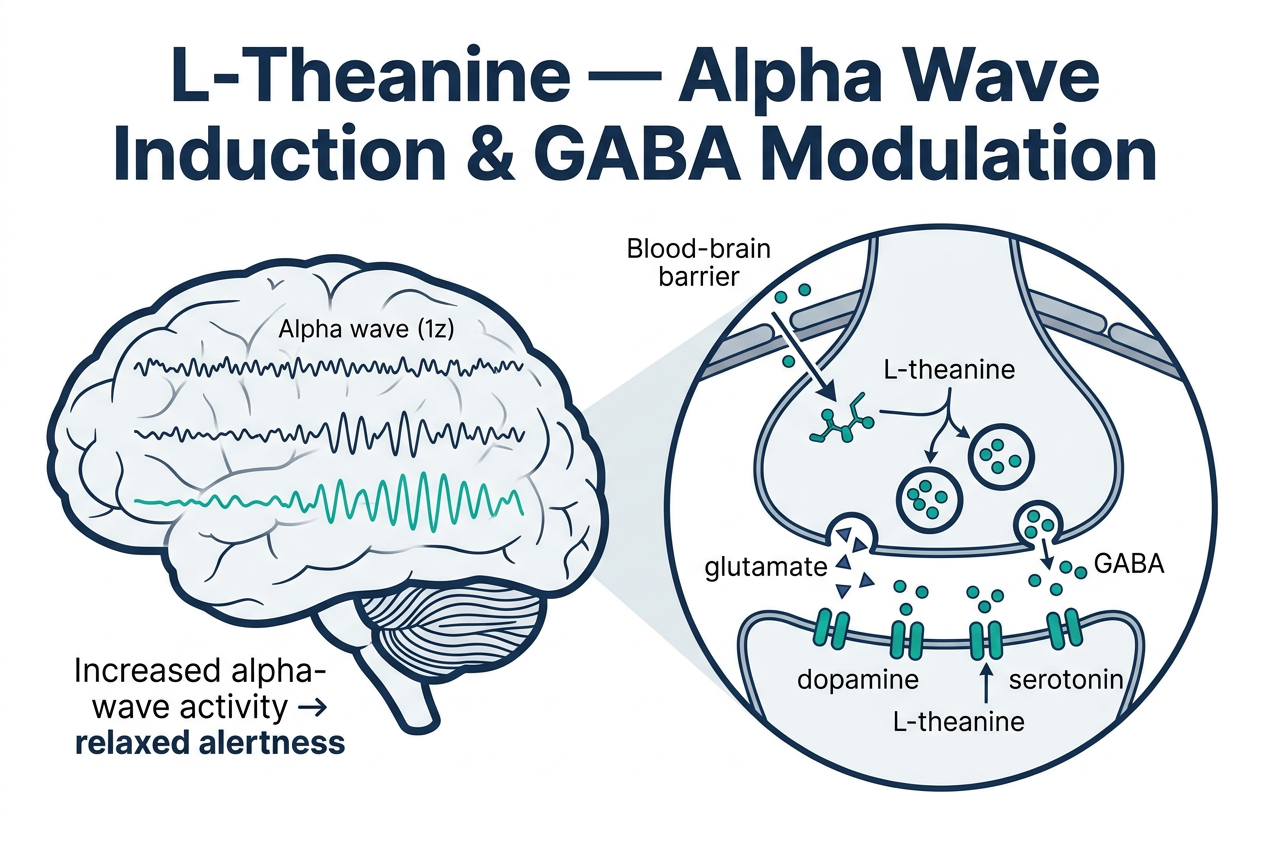
L-Theanine crosses the blood-brain barrier, increases alpha-wave activity, and modulates GABA, glutamate, dopamine and serotonin for relaxed alertness.
Off-white crystalline amino acid. Mildly umami in solution.
- Capsule
- Powder
- Tablet
- Gummy
- RTD
Capsule is generally preferred for bioavailability or efficacy.
Mechanism of Action
Crosses the blood-brain barrier and increases alpha brain wave activity. Modulates GABA, dopamine, and serotonin levels promoting calm focus.
Physiological Role
Modulates excitatory/inhibitory neurotransmitter balance. Promotes alpha-wave EEG activity associated with relaxed alertness.
Primary Pathways
Performance / Health Relevance
Enhances attention and reaction time when combined with caffeine. Reduces jitter and anxiety from stimulants. Supports sleep quality without sedation.
Evidence Review
No meta-analyses or systematic reviews indexed for this ingredient yet.
Dimensions marked N/A have no indexed evidence of that class. They are shown as unavailable rather than scored.
Practical Use & Dosage
- Minimum Effective Dose
- 100mg
- Optimal Range
- 100–200mg for focus (with caffeine); 200–400mg for relaxation/sleep
- Upper / Caution Level
- 600mg/day
- Timing
- 30 minutes before desired effect. For sleep, 1 hour before bed.
- Best Format
- Capsule or sublingual tablet
- Bioavailability
- Well absorbed orally. Peak plasma concentration within 30–60 minutes.
- Absorption Considerations
- Can be taken with or without food. Sublingual may provide faster onset.
Safety & Interactions
Side Effects
- •None commonly reported
Contraindications
- Hypotension (may potentiate blood pressure reduction)
- Use with sedatives (additive calming effect)
Drug Interactions
- •May potentiate effects of blood pressure medications
Who Should Avoid
- •Pregnant or breastfeeding women (limited safety data)
- •Those on antihypertensive therapy without medical guidance
Monitoring
No monitoring required. One of the safest nootropic compounds available.
Frequently Asked Questions
Auto-generated from indexed evidence — dosage, safety, interactions, and more.
When is L-Theanine typically used or indicated?
L-Theanine is most commonly used for: Focus enhancement, Relaxation, Sleep onset, Caffeine synergy. Modulates excitatory/inhibitory neurotransmitter balance. Promotes alpha-wave EEG activity associated with relaxed alertness.
How does L-Theanine work?
Crosses the blood-brain barrier and increases alpha brain wave activity. Modulates GABA, dopamine, and serotonin levels promoting calm focus.
What is the recommended dose of L-Theanine?
The optimal range is 100–200mg for focus (with caffeine); 200–400mg for relaxation/sleep. with a minimum effective dose of 100mg. Best taken: 30 minutes before desired effect. For sleep, 1 hour before bed.. Upper / caution level: 600mg/day.
What are the side effects of L-Theanine?
Reported side effects include: None commonly reported. Monitoring: No monitoring required. One of the safest nootropic compounds available.
Does L-Theanine interact with medications?
Known or theoretical interactions: May potentiate effects of blood pressure medications. Always check with a clinician before combining with prescription medication.
Who should avoid L-Theanine?
L-Theanine is generally not recommended for: Pregnant or breastfeeding women (limited safety data); Those on antihypertensive therapy without medical guidance; Hypotension (may potentiate blood pressure reduction); and Use with sedatives (additive calming effect).
How strong is the evidence for L-Theanine?
Evidence level: Moderate (overall score 72/100), based on 3 indexed studies on SuppIndex.
Research & References (3)
L-theanine and caffeine in combination affect human cognition
Combination improved speed and accuracy of attention and reduced susceptibility to distraction.
Effects of L-theanine on attention and reaction time response
Acute trial of L-theanine alone and with caffeine on attention performance.
Anti-stress, behavioural and magnetoencephalography effects of an L-theanine-based nutrient drink
Double-blind crossover study of L-theanine on stress and brain activity in healthy adults.
Trademark Ingredients

Related Ingredients
Other top-rated ingredients in Nootropics.
Caffeine Anhydrous
90/100Methylxanthine alkaloid; non-selective adenosine A1/A2A receptor antagonist; raises cAMP, catecholamine release, and Ca²⁺ sensitivity in muscle.
Alpha-GPC
78/100Highly bioavailable choline donor that elevates brain acetylcholine levels, supporting memory, learning, and muscular power output via enhanced neuromuscular junction signaling.
Lion's Mane
72/100Medicinal mushroom containing bioactive compounds (hericenones, erinacines) that cross the blood-brain barrier and stimulate endogenous NGF production, supporting neurogenesis and cognitive function.
Research Overview
Moderate EvidenceCite this ingredient
One-click citation export in APA, MLA, Chicago, BibTeX, or HTML. The URL below is stable and safe to link.
Stable URL
https://thesuppindex.com/ingredients/l-theanine
SuppIndex. (2026). L-Theanine: Evidence summary, dosage and clinical studies. Retrieved October 23, 2026, from https://thesuppindex.com/ingredients/l-theanine
Based on 3 indexed studies · Evidence level: Moderate.
Goal Ratings
Stack Compatibility
Classic stack with caffeine (1:2 or 1:1 ratio). Combines well with ashwagandha and magnesium for comprehensive stress/sleep support.